24 Nov 2026

The move to technology-assisted trimming

Smart inspection and assessment technologies support manual trimming

Over several decades, the trimming process in a poultry processing plant still means manually removing defects from meat with a knife. What has changed dramatically is everything around the trimming table, such as the technologies that support operators in their work.

Sensorx 2Sisters Trimming

The act of meat trimming remains one of the few processing steps that still relies on human skills. Because every product and every defect can be different, it is difficult to fully automate the trimming task. It takes experience and human judgment to decide how much material should be removed while leaving as much quality meat as possible available for sale.

Holistic Approach2400

Inspecting, assessing and cutting

But unlike earlier days, the operator doesn’t have to judge anymore whether a fillet is A or B-grade quality. The role of operators has changed. Instead of inspecting, assessing and cutting, they now simply perform the cut, following instructions from technical aids. So the trimming action has gained speed, as fewer meat pieces pass by (only the ones that really need trimming) and the time spent per meat piece has decreased. There’s no more human evaluation, only cutting. Thanks to major advances in inspection and sorting technology, including artificial intelligence, the inspecting and assessing tasks have been taken over by intelligent equipment.

100% trimming

Breast meat trimming can take place after deboning and after several inspection stages, making it a multi step process before products can move on to packaging or further processing.

As a pre trim solution, OQULA inspects both sides of each breast fillet for quality defects before trimmers start doing their job. Trimmers receive only the fillets that require rework, meaning 100% of the products presented to them need attention. They know that each fillet arriving at the trim station is known to contain a defect, detected by OQULA, such as excess fat, bruises, blood spots, green muscle disease, halving errors, and visible bones or cartilage. This avoids human, subjective decision-making about defects and allows operators to focus solely on trimming.

A-quality fillets are not sent to the trimming stations, which avoids overtrimming. That’s because a SystemFlex Distributor positioned after OQULA automatically diverts these fillets to a separate conveyor, allowing them to continue to the next process step untouched and preserving their full value and integrity.

Oneflow1

Ergonomic and efficient trimming

Of course, traditional trim stations with as few as four or as many as dozens of workstations are still widely used. Operators pick fillets from the conveyor, trim them, and place them back on the belt. Over the years, however, trim stations have become more efficient and ergonomic. A good example is JBT Marel’s CheckLine. This trim station distributes incoming fillets fairly and efficiently among operators. Based on real-time demand and the capability of each operator, CheckLine’s flippers automatically present fillets to individual workstations, eliminating the need for operators to reach over the conveyor to take off the products.

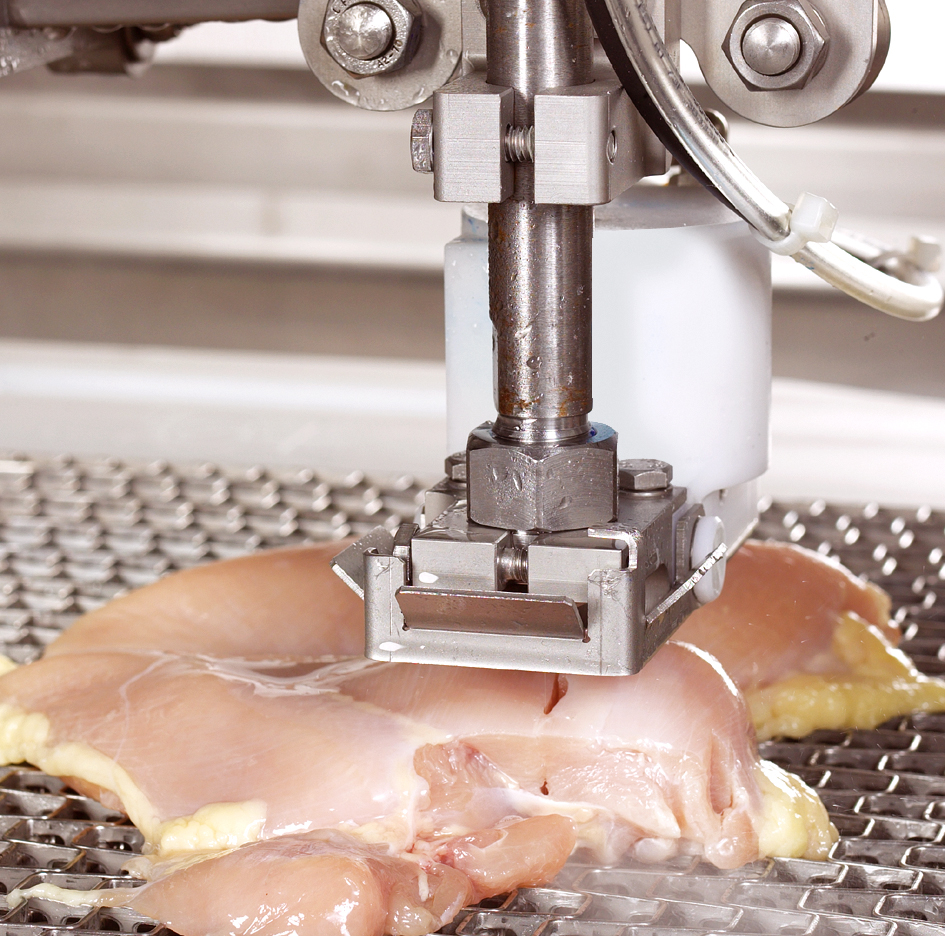
DSI fat trimmingAutomated fat trimming

So, the real cutting away of defects remains a human job with an ordinary knife, but there are initiatives to robotize it, like the DSI Waterjet Cutter which can detect and cut away fat. By using laser scanning and smart software , it can automatically control high-pressure water jets to cut away the fat. So far, DSI defect detection is limited to fat and does not include bruises, blood spots or other anomalies.

Optimal moment

Another technical aid that improves trim station efficiency is OneFlow. Once trimmed, former B-grade fillets are upgraded to A-grade quality and must be merged back into the product flow. The OneFlow solution features a so-called dropper, a receiving bin positioned above a conveyor carrying A-grade fillets, to temporarily hold the trimmed product. Using sensors and software, the system identifies the optimal moment to release the fillet and place it into an available gap on the conveyor below.

Trimmers know that each fillet arriving at the trim station is known to contain a defect

SensorX x-ray

Another trimming spot is the SensorX. The X-ray scan detects internal residual bones and other small hard particles. Fillets containing such foreign material are sent for rework. Just like with the OQULA, the trimmers receive only fillets with defects that should be 100% trimmed. They receive it via a lower horizontal return belt and a vertical belt, that puts the fillets in a tray near the trim stations of the SensorX. On the HMI screen, they can see where the bone or particle is located in the fillet, which eases the rework action. After being trimmed, the fillets can be put in a OneFlow dropper at this location too, again to be reinserted smoothly in the A-grade product flow.

Checkline2400

Reducing labor

Many processors are looking for ways to reduce the number of operators needed for trimming in the secondary process. Thanks to various technical tools, such as JBT Marel’s Q-Wing system, OQULA pre-trim inspection system, and SensorX, only the B-quality products that really need to be trimmed are sent to the operators. As a result, operators no longer need to perform the initial inspection and assessment, and can focus on removing defects, reducing labor requirements. In some cases, the presence and position of a defect are indicated on a screen as an additional aid.

Besides the inspection tools, there are solutions, such as CheckLine and OneFlow, that help trimmers work more effectively. But in the end, the actual trimming itself still comes down to manually removing the defect with a knife.

Eye meat trimmingEye meat trimming

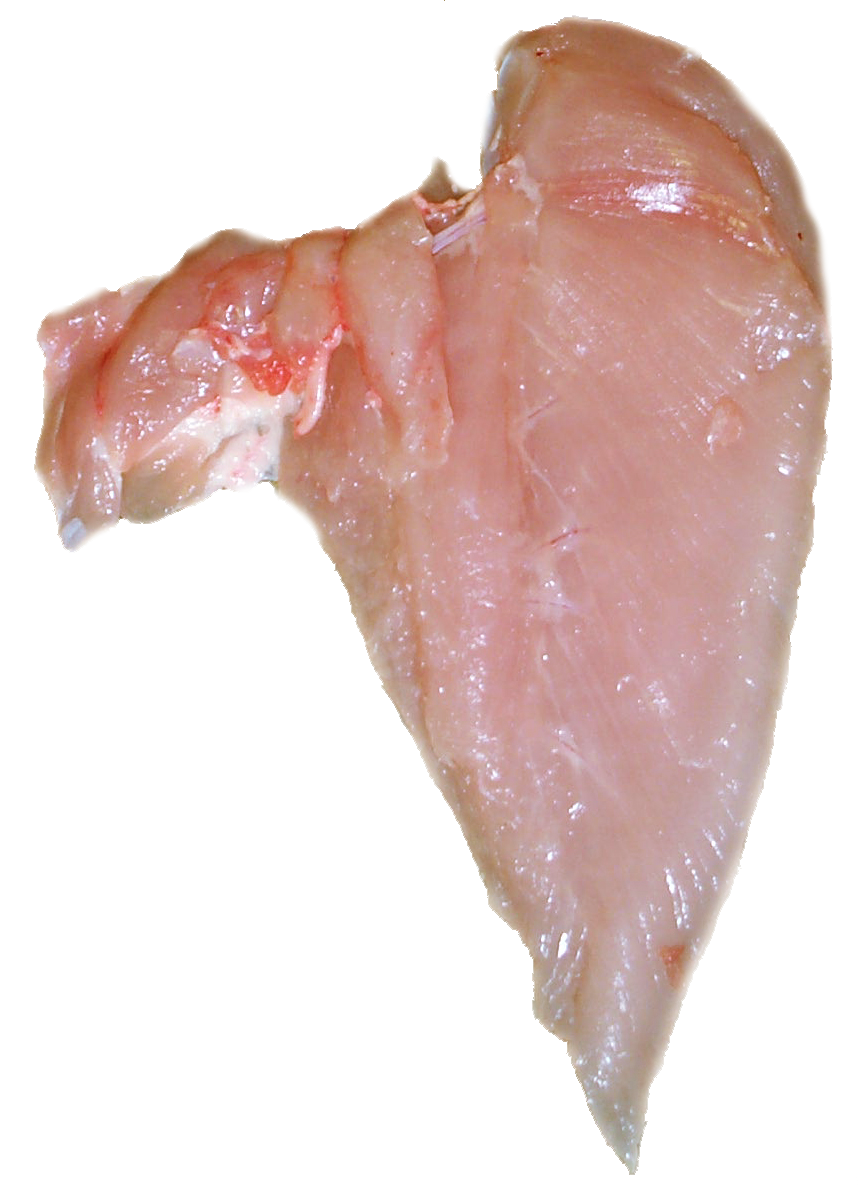
One specific trimming activity has been automated completely by JBT Marel. Thanks to the ATHENA, AMF-i and FHF FlexControl deboning solutions, manual trimmers no longer need to decide about leaving on or cutting off the eye meat of the fillet, which is located in the wing pit of the carcass. Some customers choose to keep this reddish piece of meat attached to the fillet, as it adds weight to the product. It is actually a valuable piece, although it may also contain a bone. Other customers don’t want to harvest the eye meat and leave it on the carcass. In the ATHENA, this is a simple setting on the HMI, which engages or bypasses the Breast Meat Trimmer module. Similar modules are to be found in the AMF-i and FHF FlexControl.

Get in touch

Our dedicated team is here to help and answer any questions you may have. Please complete the form, and we’ll get back to you as soon as possible. We look forward to hearing from you.

You can unsubscribe at any time. For more information on how to unsubscribe, our privacy practices and how we are committed to protecting and respecting your privacy, please review our privacy policy.

Login to get full access

Enter password to continue

Wrong password